

Duration:360 Hours (typically completed in 3 months (accelerated) or 6 months (regular)
Eligibility:Minimum SSC (Secondary School Certificate) or equivalent pass (Requirements may vary slightly by institute)
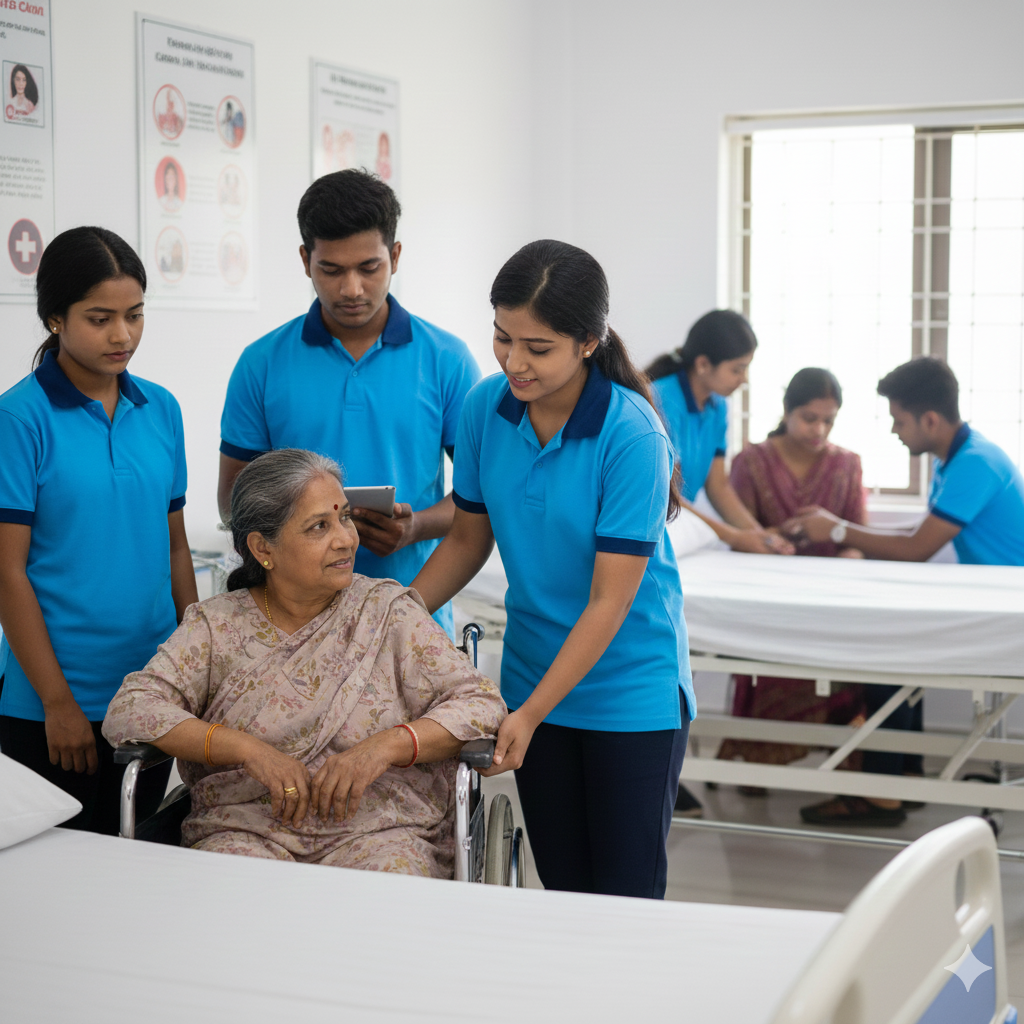
The curriculum is designed to provide both theoretical knowledge and practical hands-on experience, covering essential caregiving principles:
| Core Area | Key Skills Taught |
| Personal Care & Hygiene | Assisting with bathing, dressing, grooming, toileting, mobility, and ensuring patient dignity and cleanliness. |
| Health & Safety | Identifying occupational safety and health (OSH) practices, preventing infections, and safe lifting/handling techniques. |
| First Aid & Emergency Response | Basic first aid, including CPR (Cardiopulmonary Resuscitation), wound care, and managing common emergencies like choking or falls. |
| Health Monitoring | Taking and recording vital signs (blood pressure, temperature, pulse), recognizing abnormal symptoms, and when to seek professional help. |
| Nutrition & Meal Assistance | Understanding basic nutrition, meal planning, dietary needs, and safely assisting patients with feeding and hydration. |
| Specific Care Segments | Introduction to the unique needs of different populations, such as Elderly Care (e.g., mobility, chronic disease management) and Children Care. |
| Communication & Ethics | Effective communication with patients and families, providing emotional support, maintaining confidentiality, and upholding ethical and professional standards. |
| Basic Clinical Skills | May include assisting with basic nursing tasks, wound dressing, and light Basic Physiotherapy exercises (under professional guidance). |